
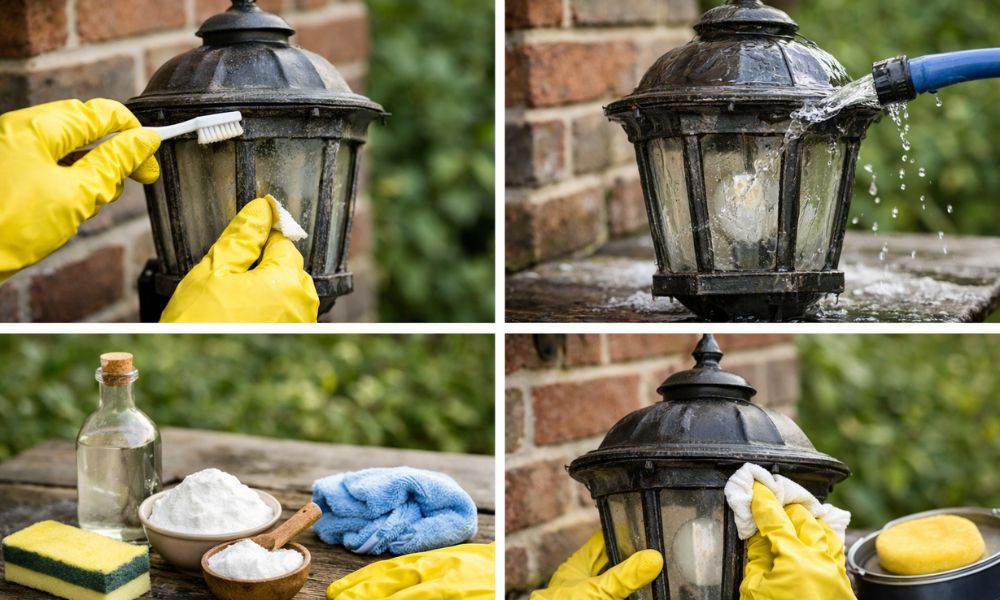
My porch light once looked dull and chalky. The shine was gone, and my entry felt tired. That pushed me to learn how to clean oxidized outdoor light fixtures the right way.
Sun, rain, and air cause metal to form a pale layer called oxidation. It sits on the surface and can be removed with care. I tested simple home methods and made small mistakes, like using rough pads that scratched the finish.
In this guide, I will show you how to clean outdoor light fixtures safely and how to restore faded outdoor light fixtures without replacing them. Let’s bring the shine back and make your home look fresh again.
Quick Answer – How To Clean Oxidized Outdoor Light Fixtures
Turn off the power at the switch and breaker. Remove the fixture if possible. Apply white vinegar or a baking soda paste to the oxidized surface. Gently scrub with a soft cloth. Rinse with clean water, dry fully, then apply a thin coat of protective wax or sealant.
What Causes Outdoor Light Fixtures To Oxidize?
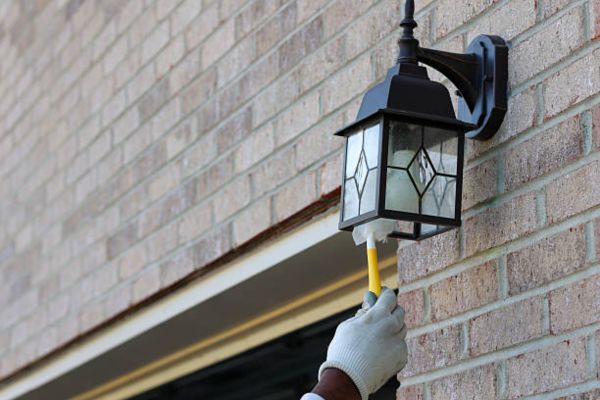
Outdoor light fixtures face rain, humidity, and harsh sun every day. UV rays break down protective coatings. Moisture reacts with exposed metal. This natural reaction forms a dull, chalky layer on the surface.
In coastal states, salt in the air speeds up this process. Salt pulls moisture onto metal and increases surface corrosion. Aluminum, brass, and copper are more prone to oxidation because they react easily with oxygen.
Oxidation happens through a chemical reaction between metal and oxygen. It usually affects the surface layer only. Rust is different. Rust eats into iron and steel and causes deep structural damage.
Tools & Supplies I Personally Use
- White vinegar
- Baking soda
- Soft microfiber cloth
- Non-scratch sponge
- Old toothbrush
- Protective wax
- Rubber gloves
I once used steel wool on a porch light. It removed oxidation fast but left tiny scratches. Those marks caught sunlight and looked worse than the dull finish. Since then, I stick to soft tools only.
Step-By-Step – How To Clean Oxidized Outdoor Light Fixtures
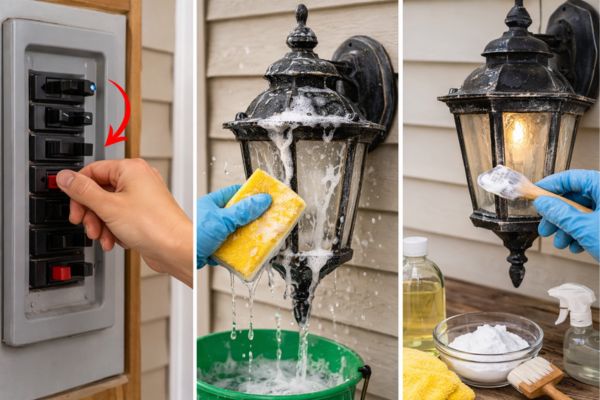
Step 1 – Turn Off Power Completely
Safety comes first. Switch off the wall control and flip the breaker. This prevents shock and protects wiring during cleaning.
Step 2 – Remove Dirt & Debris
Wash the surface with mild soap and water. Dirt blocks cleaners from reaching oxidation. A clean surface gives better results.
Step 3 – Apply Oxidation Cleaner
Use white vinegar for light buildup. Apply baking soda paste for thicker oxidation. Commercial cleaners work well for heavy damage.
| Type | Best For | Cost | Safety |
| Vinegar | Light oxidation | Low | Very safe |
| Baking Soda | Medium buildup | Low | Safe |
| Commercial Cleaner | Heavy oxidation | Medium | Moderate |
Step 4 – Gentle Scrubbing Technique
Scrub in small circular motions. Use light pressure. Avoid abrasive pads that damage the finish.
Step 5 – Rinse & Dry Thoroughly
Rinse with clean water. Dry with a microfiber cloth. Full drying prevents water spots and new oxidation.
Step 6 – Seal & Protect
Apply a thin coat of wax or UV protectant spray. This creates a barrier against moisture and sun. Protection slows future oxidation.
How To Restore Faded Outdoor Light Fixtures
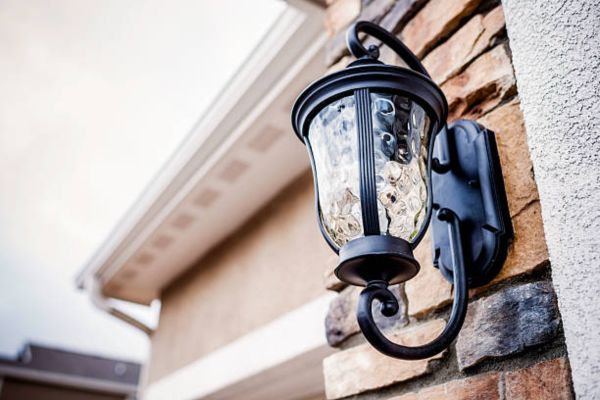
Some fixtures look faded even after cleaning. In this case, repainting helps. Use exterior metal spray paint and finish with a clear protective coat.
I restored a seven year old porch light instead of replacing it. The color came back rich and clean. That project saved money and gave the fixture a second life.
How To Clean Outdoor Light Fixtures Without Removing Them
Use a spray bottle with vinegar solution. Spray lightly and wipe with a soft cloth. A stable ladder improves safety. A microfiber pole cleaner works well for high fixtures.
Quick cleaning every few months keeps oxidation light and manageable.
How Often Should You Clean Outdoor Fixtures?
- Mild climates → Every 6 months
- Coastal areas → Every 3 months
- Harsh winters → After season ends
Simple checklist:
- Inspect surface
- Wipe dirt
- Check for dull patches
- Apply protective wax
Common Mistakes That Damage Fixtures
- Using steel wool
- Skipping protective sealant
- Leaving moisture on metal
- Ignoring power safety
- Applying bleach to metal
These errors shorten fixture life and increase repair costs.
When It’s Better To Replace Instead Of Restore
Replace fixtures with deep pitting corrosion, cracked wiring, brittle seals, or severe rust. Surface oxidation can be restored. Structural damage usually requires replacement.
Restoration costs little. Full replacement often costs much more due to parts and labor.
FAQs
How do you remove oxidation from outdoor lights?
Turn off power. Clean dirt first. Apply vinegar or baking soda paste. Gently scrub the oxidized layer. Rinse and dry fully. Finish with protective wax to slow future oxidation.
Can vinegar damage outdoor light fixtures?
White vinegar is mild and safe for most metals. Rinse and dry after use. Avoid soaking electrical parts.
How do you restore faded aluminum light fixtures?
Clean the surface. Lightly sand dull areas. Apply exterior metal spray paint. Seal with clear coat for long term protection.
What is the fastest way to clean outdoor light fixtures?
Wipe with vinegar solution and a microfiber cloth. Dry fully and apply wax. Quick care prevents deep buildup.
How do I prevent oxidation in the future?
Clean twice per year. Keep fixtures dry. Apply protective wax. Regular care slows surface damage.
My Personal Maintenance Routine
I clean my outdoor lights in spring and fall. That schedule keeps oxidation light and easy to manage. Simple care saves money over time.
A thin wax layer protects metal from rain and UV rays. Prevention takes minutes. Repair can take hours.
Final Thoughts
Outdoor lights frame your home. A dull fixture can make the whole space feel worn. Proper cleaning restores shine and protects your investment.
Turn off the power. Clean gently. Seal the surface. A small effort keeps your lights bright for years.