
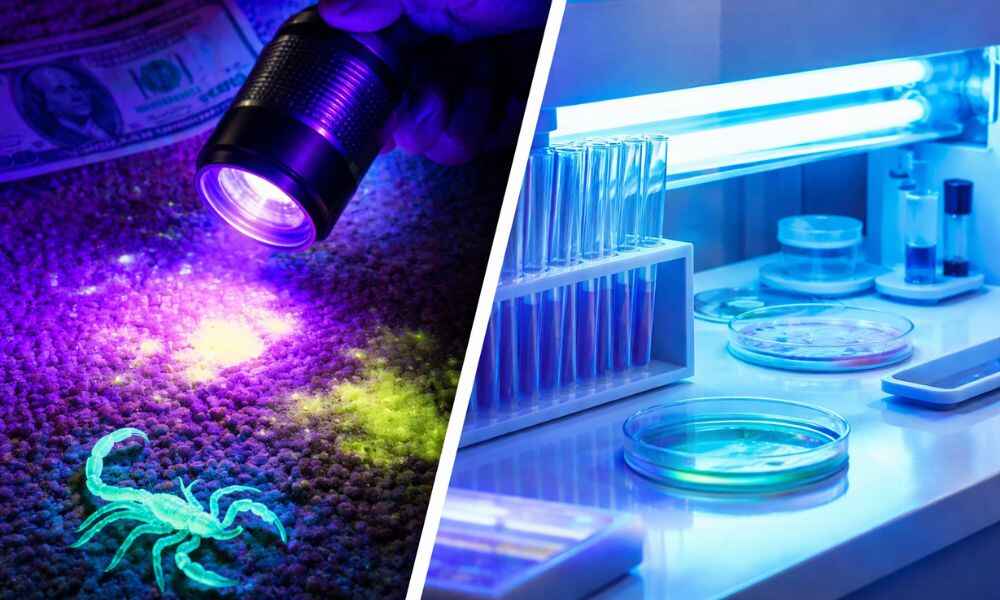
Many people ask is black light and uv light the same. I asked the same thing the first time I saw a purple glow lamp at a party. White shirts started to glow, and curiosity hit me right away.
Later, I used a black light to check stains at home. That simple test helped me understand black light vs UV light and what a black light really does. In this guide, I will explain the difference and what a black light shows in real life.
What Is UV Light?
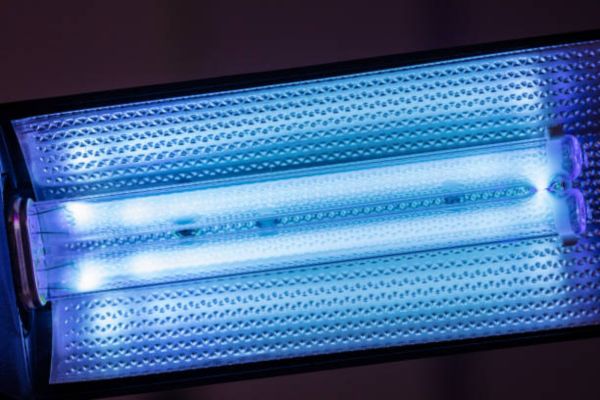
UV light stands for ultraviolet light. It sits just beyond violet in the light spectrum. Human eyes cannot see it, yet it exists all around us. The sun sends UV rays to Earth every day.
Ultraviolet light works as a form of energy. It travels in waves that sit between visible light and X-rays. Scientists group these waves into three types. These types help explain how UV affects skin, materials, and living things.
The three main types include UVA, UVB, and UVC. UVA travels the farthest and appears most often in daily life. UVB affects the skin and causes sunburn. UVC carries strong germ-killing power and appears mostly in controlled equipment.
UV light appears in many everyday places. Sunlight carries natural ultraviolet energy. Medical tools use UV to clean surfaces. Many people also ask if ultraviolet is the same as black light, which creates confusion between the broader UV category and one special type of lamp.
What Is a Black Light?
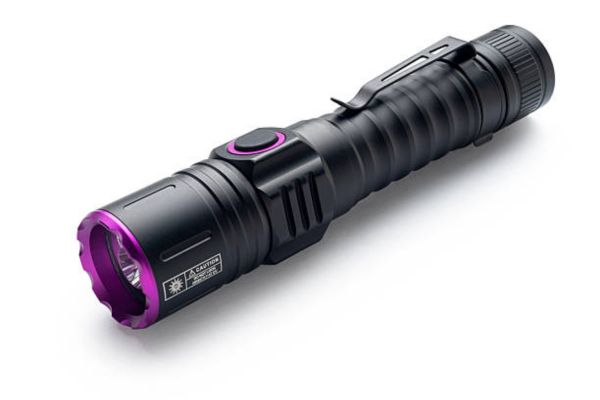
A black light represents a special type of ultraviolet lamp. It produces light that human eyes barely see. Most black lights glow purple or deep blue. That glow often sparks curiosity.
Simple Definition
A black light emits ultraviolet energy, mainly within the UVA range. This type of light makes certain materials glow. The glow effect comes from a process called fluorescence.
Many objects contain chemicals that react to UV energy. The energy excites tiny particles inside the material. These particles release visible light, which creates the glowing effect many people notice under black light.
How Black Lights Work
Black lights send out mostly UVA wavelengths. These waves travel around 320–400 nanometers. The lamp filters out most visible light, leaving ultraviolet energy to interact with surfaces.
Fluorescence appears once UV rays hit certain materials. Bright fabrics, minerals, and organic stains often glow. This reaction explains why black lights appear in inspections and entertainment settings.
Common Uses of Black Lights
Black lights appear in many practical situations. Each use relies on the glow reaction produced by ultraviolet energy.
Common examples include:
- Detecting stains or bodily fluids
- Glow-in-the-dark art and party lighting
- Scorpion detection in desert regions
- Checking counterfeit money or security markings
These uses also answer a common question many people search online: what does a black light show? The light reveals substances that stay hidden under normal lighting.
Black Light vs UV Light – Key Differences Explained
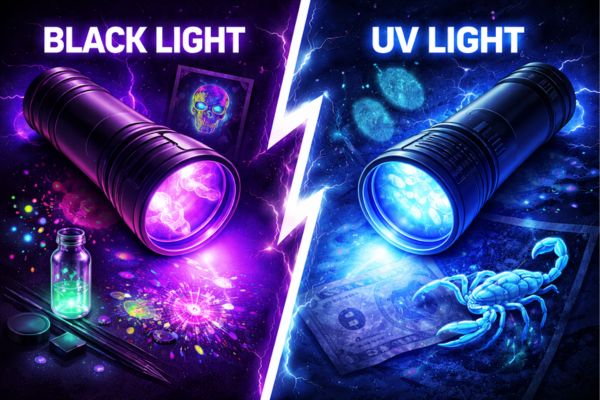
Many people feel confused about black light vs uv light. The terms sound similar, yet the meaning differs. UV light describes a large category, while black light represents one specific part of that category.
| Feature | Black Light | UV Light |
| Type | Specific type of UV light | Broad category |
| Spectrum | Mostly UVA | UVA, UVB, UVC |
| Common Use | Fluorescence effects | Sterilization, sunlight, science |
| Visibility | Purple or blue glow | Usually invisible |
The table shows the core difference clearly. UV light works like a large family of wavelengths. Black light belongs to that family and focuses on the UVA section.
Many people still feel confused about black light vs UV light, since both terms often appear together but describe different types of light.
Is a Black Light a UV Light?
Yes, a black light is a form of ultraviolet light. It produces energy within the UVA portion of the UV spectrum. This type of lamp helps create glowing effects rather than strong sterilisation.
A simple analogy helps explain the relationship. Think of UV light as a large family. Each wavelength acts like a different member of that family. Black light represents one specific member within that group.
This explanation also answers two common questions people ask online. Many search is a black light a uv light or is uv light the same as black light? The short truth remains simple: black light belongs to UV, yet UV contains several other forms.
What Does a Black Light Show?
Black lights reveal materials that react to ultraviolet energy. Many everyday substances contain compounds that glow under UV exposure. This glow helps people spot hidden details.
Common things that appear under black light include:
- Pet urine stains on carpets
- Bodily fluids on fabrics or surfaces
- Mould growth on walls
- Lint and fibres on clothing
- Scorpions in desert environments
- Certain fluorescent minerals
A black light inspection once helped me check a rental room before moving in. Normal light showed a clean carpet. The UV lamp revealed several old stains that regular lighting never showed. That moment proved how powerful this tool can be for cleaning checks.
When Should You Use UV Light Instead of a Black Light?
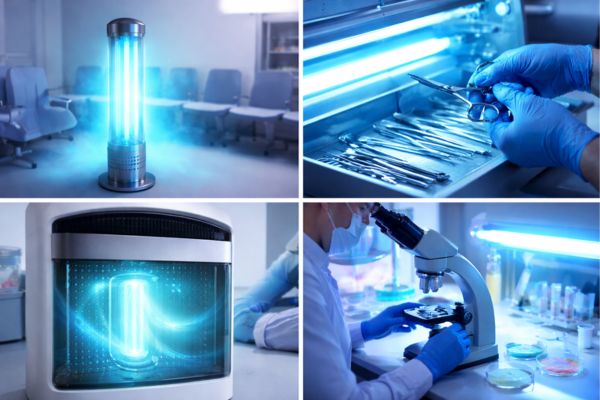
Some tasks require stronger forms of ultraviolet light. Black lights work mainly for detection and fluorescence. Other UV systems perform medical or sanitation tasks.
Situations that require specialised UV light include:
- Germicidal sterilisation systems
- Medical equipment sanitation
- Air purification units
- Laboratory testing tools
These systems often use UVC wavelengths, which carry powerful germ-killing ability. This range stays far stronger than standard black lights.
Safety also matters in these situations. Strong UV exposure can damage eyes or skin. Protective equipment and controlled environments help reduce these risks.
Are Black Lights Safe?
Black lights operate within the UVA range, which carries lower energy compared with other UV types. Most consumer black lights stay safe for short-term exposure.
Direct exposure to strong UV sources still deserves caution. Eye protection helps reduce unnecessary risk. Many inspection professionals also limit exposure time around powerful lamps.
Health authorities such as the CDC guide ultraviolet safety. Their recommendations focus on limiting direct eye exposure and using proper protective gear around intense UV systems.
My Personal Experience Using Black Lights
My first black light purchase came from pure curiosity. I wanted to test carpet cleanliness in an old apartment. The lamp cost less than a dinner out.
The result surprised me more than expected. Several faint stains appeared instantly under UV light. Regular lighting never showed those marks.
Many people believe black lights reveal everything. The truth feels more balanced. They show certain materials that react to ultraviolet energy, yet not every stain glows.
Common Myths About Black Lights and UV Lights
Many myths surround ultraviolet lighting. These misunderstandings often create confusion online.
Myth 1: Black light and UV light are completely different
Reality shows the opposite. Black lights belong to the ultraviolet family.
Myth 2: Black lights kill germs
Most black lights do not sterilize surfaces. Germ-killing systems use stronger UVC wavelengths.
Myth 3: Black lights are dangerous
Consumer black lights generally stay safe under normal use. Problems appear mainly with powerful UV sources used in industrial or medical settings.
Understanding these myths helps clear up common misunderstandings.
How to Choose the Right UV or Black Light
Selecting the right lamp depends on purpose. Different wavelengths serve different needs.
Important factors to consider include:
- Wavelength range: 365 nm offers stronger fluorescence. 395 nm appears more purple.
- Lamp type: LED lamps provide efficiency and portability.
- Intended use: inspection, entertainment, or sanitation.
Common uses include:
- Home stain inspection
- Party lighting or glow decorations
- Professional sanitation equipment
Choosing the correct wavelength ensures the best results.
FAQs
Is UV light the same as black light?
UV light describes a large category. Black light represents one specific type inside that category.
What does a black light show on skin?
Black light may reveal oils, lotions, and certain residues on skin due to fluorescence reactions.
Can black lights detect germs?
Black lights reveal substances that glow. Germ detection requires specialized UV sterilization tools.
Why do things glow under black light?
Certain materials contain fluorescent compounds. UV energy excites these compounds, causing visible glowing light.
Final Thoughts
Black lights and ultraviolet light often sound identical. In reality, the relationship works differently. Black light represents one specific type inside the broader UV family.
Understanding this difference removes much of the confusion. Black lights help reveal hidden stains and glowing materials. Other UV wavelengths serve scientific, medical, and sanitation roles.
Choosing the right type of UV light depends on the purpose. Once the difference becomes clear, both technologies make far more sense.